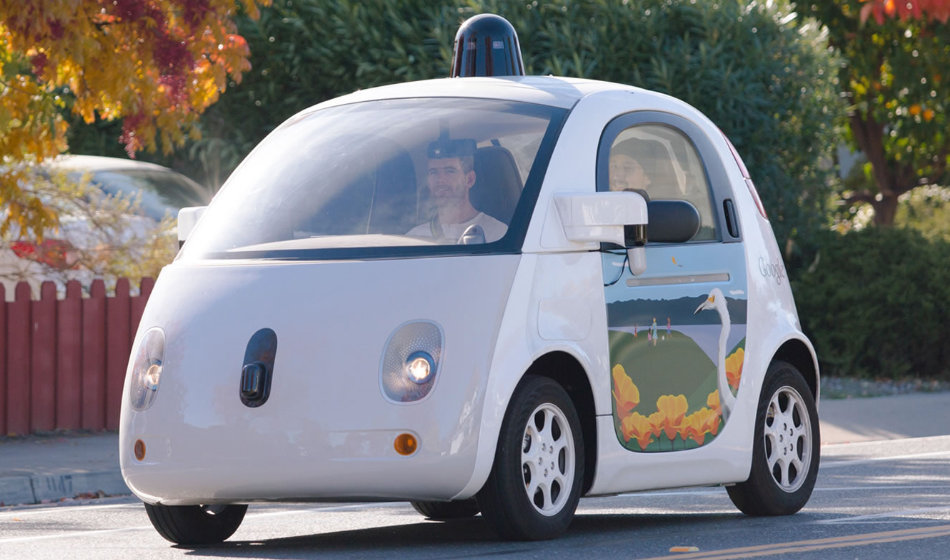
The last two decades have seen an incredible shift in the way people do things thanks to technology advancements. We may be seeing even more changes, especially on our motorways thanks to Google and Uber’s efforts at creating automated cars.
The journey hasn’t been easy for Google, who are by far the leading competitors in this emerging market. They have had more than 6 years of on-the-road testing of their automated car. Other players who are getting into this potentially lucrative market still have a lot to learn considering the fact that Google’s automated car claims to have mastered at least 90% of the basics of driving.
With that said, 90% is still 90% and isn’t 100%. The remaining 10% that still needs to be perfected to get these cars on the road and approved appears like it’s going to be the hardest part of the journey. According to Google’s head of the self-driving car project, Dmitri Dolgov, the two biggest problems in this remaining 10% are:
- Creating sensors that can recognise difficult traffic situations in both urban and suburban areas.
- Designing artificial intelligence that can respond to challenging traffic issues in residential areas.
What Are Google’s Automated Cars Currently Capable Of?
In order to appreciate just how far Google has come, it is important for us to take a look at just what they have done in the past six years.
Google currently has an impressive fleet of 60-automated cars which are all capable of navigating their way on busy highways. These cars are able to detect pedestrians and those riding bicycles. Google has even incorporated the ability to detect people on horseback, so the cars know to maintain a safe distance.
That’s not all.
Dolgov also mentions that these cars also have the ability to handle a situation in which they are in the wrong lane with oncoming traffic. The flashlights of ambulances can also be detected by these automated cars, which then respond by letting the emergency vehicle pass.
When Will Consumers be Able to Buy Google’s Automated Cars?
A fixed date hasn’t been set yet because no one is really sure when the last 10% of testing will be done. However, there are already talks that indicate that should the concept proceed to large-scale manufacturing, Chrysler will be the car manufacturer to produce the first car – the 100 Hybrid Chrysler Pacifica minivan.
Something that is also slowing down the release date of these cars is the fact that they haven’t reached the needed testing mileage that is required in order to consider such cars safe. This is according to Toyota Motor Corp. president Akio Toyoda.
Automated cars are required to have at least 8.8 billion test miles. Google’s automated cars have only clocked a mere 2 million test miles. While the progress is impressive, there is obviously still a long way to go.
It’s a very thin line because no matter how many miles a car is subjected to while testing, no one can fully predict all the scenarios that can take place while driving. Hence it still remains to be seen if Google will be allowed to release their cars with minimal testing miles and if so, when. We wait to see how Google is going to overcome this last 10% of getting their automated cars ready for consumer use.