
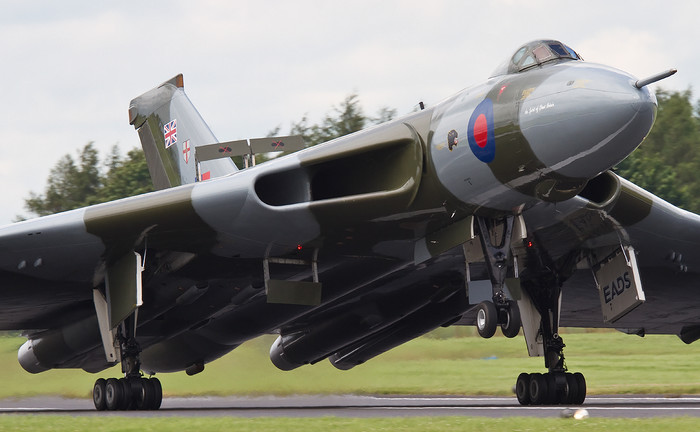
On the 28th October 2015 the Avro Vulcan XH558 B2 bomber took off from Doncaster Robin Hood Airport and flew for the very last time. The majestic delta-wing nuclear deterrent was commissioned in the 1950’s and first flew in 1960. With a wingspan of 111 feet and a length of 106 feet it was not the biggest bomber but it was the backbone of the United Kingdom’s airborne nuclear deterrent during much of the Cold War.
Powered by four Rolls Royce Bristol-Siddeley Olympus 201 engines, the Vulcan could reach speeds of Mach 0.93 (almost the speed of sound) and could certainly be heard. The engine would omit a distinctive ‘Vulcan howl‘ when operating a 92%. The XH558 cost around £2.2 million a year to be full maintained and operable. For the past few year it has been kept going by the Vulcan to the Sky Trust. It cost around £19,000 an hour to fly. After 55 year of service, the XH558 has retired and will only be available for short ‘taxi runs’ at Robin Hood Airport.
However, it is not because the aircraft has broken down or that parts are not available that it will never fly again. It is simply because the skills and knowledge required are no longer available. The people that care are getting too old to work or are no longer with us. So here we have a product that exemplifies quite the opposite of built in obsolescence. A product that has out-lived its manufacturers and was built with an aim to last. It something that we can point to that proves that hi-tech products can be built to last. Using the steam engine as an example never made a compelling point.
The Vulcan may not have been fitted with all of the computer wizardry in the latest generation of aircraft, but that misses the point. It had enough technology to have a lifespan of 55 years, not just enough to get through the first year of warranty. In our throw-away consumer led society, maybe we could learn a lesson or two from the creators of this magnificent flying machine.