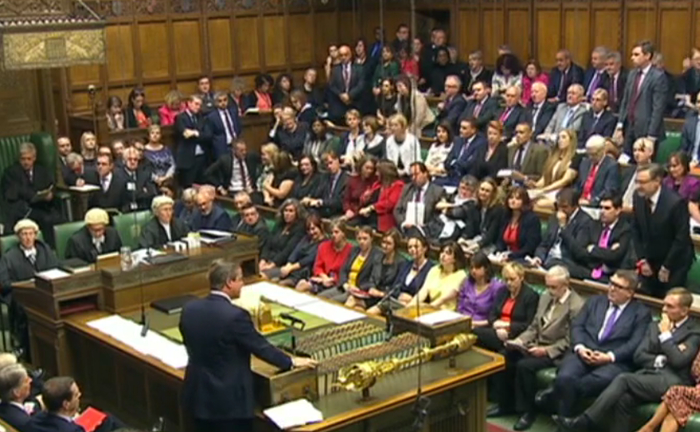
Prime Ministers Questions taken in New Direction – but for how long? Labour leader, Jeremy Corbyn, spoke yesterday of the need to bring some decorum to the House of Commons as he used a new, less ‘theatrical’ format for PMQs, breaking from centuries’ old tradition. Armed with six questions provided for him by members of the public, Corbyn’s style was far less confrontational than has been the norm previously; a move that has been seen as a tactic to relieve some of the early pressure mounting on his new leadership.
Questions from ‘Marie’, ‘Paul’, ‘Shelley’ et al focussed on the lack of affordable housing, as well as the recent cuts to tax credits and mental health services. David Cameron was able to answer all the questions succinctly, and came out of the exchanges well, however, and it is to be seen whether Corbyn will maintain this style.
Critics have noted that while it will certainly benefit Corbyn to appear to do things ‘differently’, it also takes some of the strain of the occasion off the Prime Minister, as the style of questioning meant there was no room for further questioning, and probing of the PMs initial answers; seen by many as the prime purpose of PMQs.
Cameron made the same sort of promises as Corbyn in his leader of the opposition victory speech in 2005, promising an end to ‘Punch and Judy’ politics. He welcomed the new format, saying ‘no one would be more delighted than me’ if PMQs became a ‘genuine exercise in asking questions and answering questions.’
Indeed, the PM looked and sounded delighted to point out to the new leader of the opposition when members of the Labour party seemed to be breaking from the ‘new way’ almost as soon as it had started.
‘I thought this was the new Question Time. I’m not sure the message has fully got home!’
A long term change in MPs behaviour in the Commons seems highly unlikely; much to the relief of political sketch-writers up and down Fleet Street.