
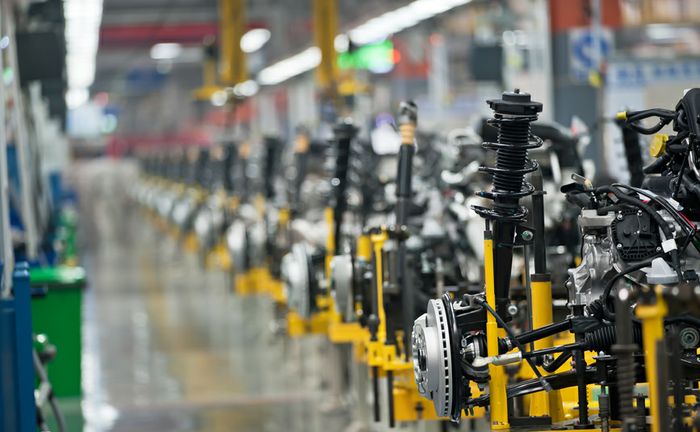
It seems like every month we hear that a new advance in technology or a clever piece of automation has removed the need for people, which really means more jobs have disappeared. This may be true when looking at low-skilled repetitive tasks or unskilled machine operatives, but when it comes to high-skilled, IT literate workers, especially those needed in the advanced manufacturing sector, this is not the case.
Advanced manufacturing is broadly defined as manufacturing that requires intensive use of knowledge (from operatives), a high level of technology usage (e.g.robotics or computers) and tends towards research and development. This can be apply to any type of manufacturing company that adopts these techniques. It has been estimated that there were approximately 29,000 advanced manufacturing enterprises operating in the UK in 2013, comprising around 23 per cent of the total number of manufacturing enterprises (128,000). These enterprises generated over £72 billion of GVA according to the government Annual Business Survey of 2014.
The UK Commission for Employment and Skills (UKCES) recent report; ‘Skills and performance challenges in the advanced manufacturing sector‘ warns that the advances achieved through automation are at risk if the right people with the right skills are not available to support them.
Dr Vicki Belt, Assistant Director at UKCES said: “There is a real demand for highly IT literate production managers and production directors with strong technical and business skills. These are the people managing the machines. They are responsible for maximising the production processes and quality assurance of outputs.”
IT skills, understanding of complex materials and the ability to translate digital design into real-world production are set to be some of the most important skills for those working in advanced manufacturing sectors – from assembly workers to production engineers. In particular, quality assurance is becoming a key skill, and one that is holding back advances in this sector.