
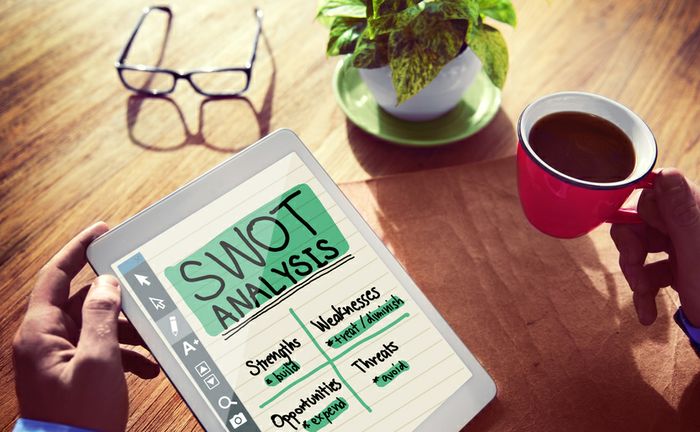
A SWOT (Strength, Weaknesses, Opportunities, Threats) analysis is a very useful tool that allows you to understand the Strengths and Opportunities in your organisation, often referred to as ‘Enablers’ and the Weaknesses and Threats you may face, often referred to as ‘Challenges’. Typically a SWOT analysis would be undertaken early in a strategic planning process after the Vision and Mission statements have been defined but before any organisational goal or strategic objectives have been considered. The SWOT analysis provides valuable input to goal and objective setting activities.
Typically a SWOT analysis takes the form of a 2 by 2 table. There are a set of pretty standard questions that can be asked to fill in the boxes as follows:
Strengths:
– What advantages does the organisation have over others?
– What is likely to produce the greatest return on investment?
– What does the organisation do well?
– What would be the best thing to implement quickly?
– If we are not looking at a particular obvious area, why not?
Weaknesses
– What are the areas where we should and could do better?
– Which areas should we avoid altogether?
– What do our customers consistently complain about?
– What do our employees consistently complain about?
– Do we have any internal/external processes that are obviously slow?
Opportunities
– What are the obvious opportunities we can see?
– What are the current exciting trends in the marketplace?
– What are the predicted long term trends in the market and technology?
– Are there any social, lifestyle or population changes we can exploit?
– What is happening with our existing development programmes?
Threats
– What are the biggest external obstacles we face?
– What are our competitors doing?
– Are there any government/regulatory changes we need to note?
– Can we keep up with technological changes?
– How good is our relationship with our suppliers?
The result might end up looking something like this: