
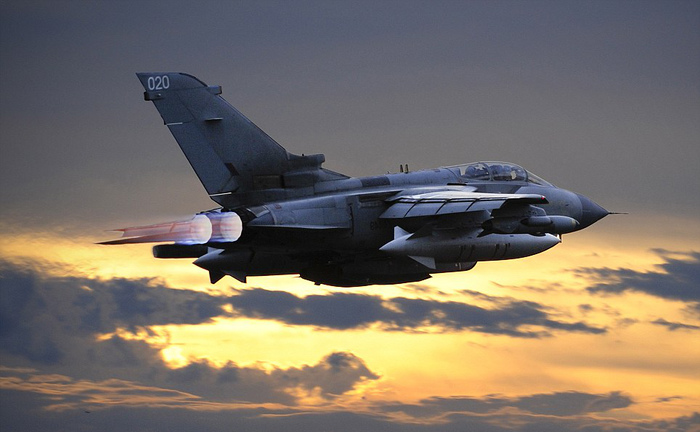
After a marathon ten-hour debate in the House of Commons, the United Kingdom is set to join its international allies with military action against Islamic State in Syria after a majority of MPs backed the government’s motion. 397 Members of Parliament voted with the government, while 223 voted against.
David Cameron will be delighted to have achieved such a large majority, managing to convince 66 Labour MPs to defy their party leader Jeremy Corbyn (although un-whipped), as well as persuading leader of the Liberal Democrats, Tim Farron, to endorse the plan on behalf of his party. Opposition to the motion came from 152 Labour MPs, including Corbyn himself, and the SNP – the only large party to all vote in tandem – as well as a number of Conservative dissenters, and Green Party MP, Caroline Lucas.
Cameron made the case that the UK needs to make a stand with its allies, including France and the USA: “Do we work with our allies to degrade and destroy this threat … or do we sit back and wait for them to attack us?”
Jeremy Corbyn responded by arguing that Cameron is rushing to get the motion through parliament before public opinion turns. He said: “It’s become increasingly clear that the prime minister’s proposals for military action simply do not stack up.”
Much has been said about Corbyn’s decision to allow Labour MPs a free vote on the issue, supposedly undermining his leadership by relenting to pressure from his Shadow Cabinet. Mathematically, it would not have made a difference either way, but symbolically the move was still important. His opponents say he has lost credibility, but in reality, he has once again stood by his principles. When he was elected, Corbyn vowed to democratize the Labour party by listening to members, affiliates and his own MPs on all issues. By giving his MPs the right to vote with their conscience on the most important vote of his leadership so far, has done exactly what he told us he would do.
UK airstrikes are likely to begin in Syria by the end of the week.