
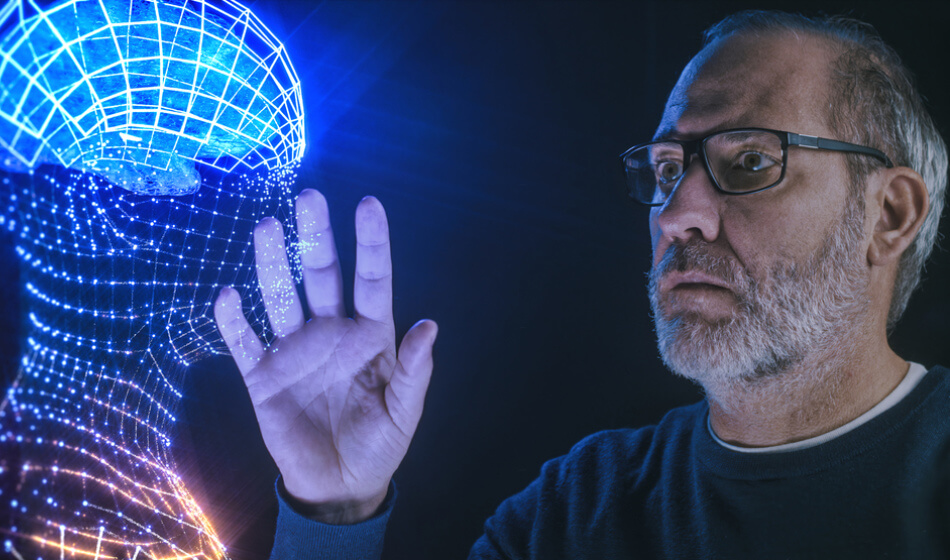
Godfather of AI Geoffrey Hinton Quits Job Over Concerns of AI’s Dangers
Geoffrey Hinton, a 75-year-old British-Canadian cognitive psychologist and computer scientist, has resigned from Google, citing concerns about the growing dangers of artificial intelligence (AI). Hinton, widely seen as the godfather of AI, warned of the potential dangers of AI chatbots and expressed regret about his work in the field. In an interview with the BBC, Hinton said that while chatbots are not currently more intelligent than humans, they soon may be. He also said that chatbots could soon overtake the level of information that a human brain holds.
Hinton’s pioneering research on neural networks and deep learning has paved the way for AI systems like ChatGPT. Neural networks are systems in artificial intelligence similar to the human brain in how they learn and process information. They enable AIs to learn from experience, just like a person would. This is called deep learning. In the interview, Hinton stated that AI systems like GPT-4 already have a significantly greater amount of general knowledge than any person. He added that while chatbots lack the same reasoning capabilities as humans, he expects this to change quickly. He warned of the growing dangers AI systems pose, especially in the hands of bad actors who use AI for malicious purposes.
The Concerns About AI Safety and Control
Hinton is not the only expert concerned about AI’s safety and control. In March, an open letter, co-signed by dozens of people in the AI field, including Elon Musk, called for a pause on all developments more advanced than the current version of AI chatbot ChatGPT so that robust safety measures could be designed and implemented. Another so-called godfather of AI, Yoshua Bengio, who won the 2018 Turing Award for his work on deep learning, also signed the letter. Bengio wrote that because of the unexpected acceleration in AI systems, “we need to take a step back.”
Matt Clifford, the chairman of the UK’s Advanced Research and Invention Agency, has said that Hinton’s announcement “underlines the rate at which AI capabilities are accelerating.” While he acknowledges that there is enormous potential in AI technology, Clifford says it is essential that the world invests heavily and urgently in AI safety and control. He emphasizes the need for international collaboration and for governments to work together to ensure that AI is developed “with a lot of thought into how to stop it going rogue.”
Hinton himself acknowledges that AI could deliver many benefits in the shorter term. However, he also recognizes the risks associated with AI and the need for responsible development. He emphasizes the need for the government to take a more active role in regulating AI, stating that he is an expert on the science of AI, not the policy. He believes the government is responsible for ensuring that AI is developed safely and with the necessary precautions to prevent it from being misused.
The Rise of AGI and Its Implications
AI chatbots are just one aspect of artificial intelligence, even if they are the most popular right now. AI is used in many other areas, from video-streaming platforms to recruitment, medical diagnosis, and insurance. We are now seeing the rise of artificial general intelligence (AGI), which can be trained to do various tasks within a specific domain. ChatGPT, for example, can only provide text answers to a query, but the possibilities within that are endless.
The pace of AI acceleration has surprised even its creators. It has evolved dramatically since Hinton built the first neural network in the 1980s. However, the rapid. Furthermore, practising gratitude regularly can help to reduce stress and anxiety. Focusing on the positive things in our lives and expressing gratitude for them can shift our mindset away from worry and stress. Instead of fixating on what we don’t have or what’s going wrong, we can acknowledge the good things in our lives, which can help us feel more content and at peace.
Gratitude can also improve our relationships with others. When we express gratitude to others, it can strengthen our connections and deepen our relationships. When we feel appreciated and valued, it can increase our sense of belonging and connection to others. In addition, practising gratitude can help us be more compassionate and empathetic towards others, encouraging us to focus on their positive qualities and actions.
Finally, gratitude can lead to increased happiness and life satisfaction. When we make a habit of focusing on the good in our lives and expressing gratitude for it, it can help us feel more fulfilled and satisfied with our lives. Grateful individuals tend to have a more positive outlook on life and experience greater happiness and joy.
In conclusion, practising gratitude is a simple yet powerful way to improve our mental health and overall well-being. It can help us shift our mindset away from negativity and positivity, reduce stress and anxiety, improve our relationships with others, and increase our happiness and life satisfaction. Whether through writing in a gratitude journal, expressing gratitude to others, or simply taking a moment each day to reflect on the good in our lives, incorporating gratitude into our daily routine can profoundly and positively impact our lives.